Stand Out: The Ultimate Guide to Exhibition Booth Design
In today’s competitive business landscape, international trade shows serve as a vital platform for companies eager to showcase their innovations, services, and products. Trade fairs and exhibitions provide an excellent professional space to strengthen brand positioning and expand customer and partner bases. Designing an impressive and effective booth is a critical component in the success of your trade show participation. This article will cover everything you need to know about exhibition booth design and production for domestic and international conferences and exhibitions.
Elevating Your Trade Show Impact: The Right Time for Creative Booth Design?
The decision to participate in a trade show and invest in booth design is typically the result of strategic thinking shared by the marketing department, sales team, and senior management. Participation goals may include:
- Promoting the company and brand
- Creating opportunities to meet potential new customers
- Launching a new product or service, or showcasing existing offerings
- Maintaining the company’s position and status as a market leader
- Strengthening and preserving relationships with existing customers
- Facilitating internal connections for companies with global representatives, as international exhibitions offer a perfect meeting place for strengthening ties
For large companies, presence at leading trade shows is essential to maintain their status, preserve connections with their professional target audiences, and ensure continued growth.
Types of Exhibition Booths
When it comes to exhibition design, there are several types of booths, primarily distinguished by their size, location, and complexity:
- Small booth design (8-12 sq m): Suitable for small companies or minimal displays based on basic marketing materials. These usually don’t require complex installation and are suitable for presenting information or small products. The exhibition Organizers often provide standard stands including branding, furniture, and electricity, offering a good solution with standard height and appearance. Such booths can accommodate 2-3 representatives.
- Medium booth design (20-50 sq m): Allows more flexibility in design and can include separate areas for product displays and meetings. This booth size can be handled by organizers, but it very much depends on the appearance you want to project. Keep in mind that it will be quite standard. Product displays can be based on existing display systems, without custom adaptation to the product. Such booths can include a projection screen, a small demonstration area, and accommodate 4-8 representatives.
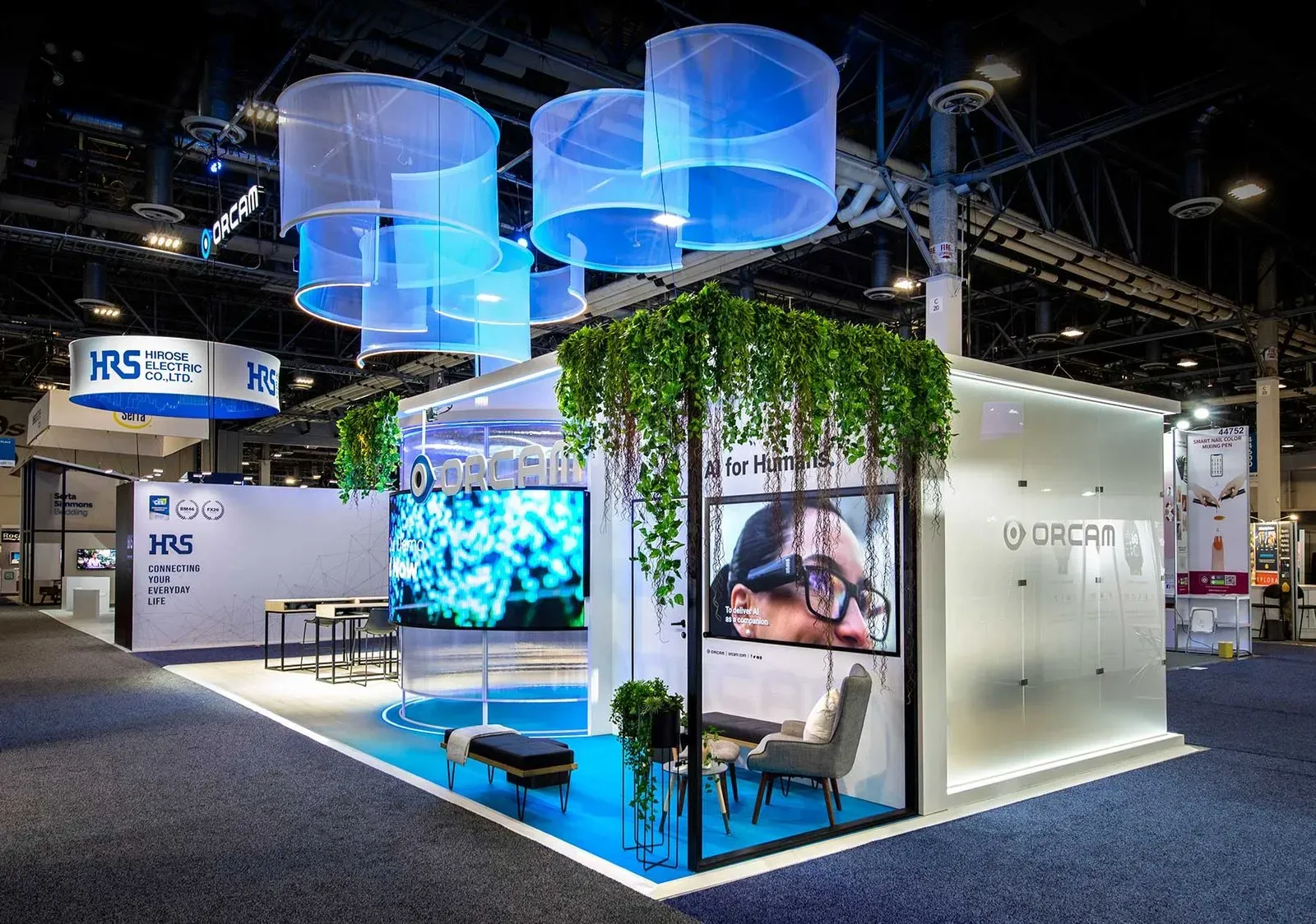
- Large booth design (80-200 sq m and above): Requires the integration of multiple functions and areas such as a reception desk, meeting areas, display spaces, demo areas, storage spaces, and brand activation zones. In the production and design of booths of this size, the importance of a creative exhibition design agency is critical to success and building a holistic approach. Base costs are high and will include considerations for ceiling design, lighting and electrical needs, and it’s important that a designer plans the space and addresses the various needs and functions.
It’s important to note that for all three options, experienced exhibition designers must consider the booth’s location in the show and the number of sides open to the public, as these significantly impact the design strategy and planning of the booth space, as well as the budget, which is a derivative of all these considerations.
In-House Resources vs. Outsourcing
Most companies don’t maintain an internal team specializing in exhibition booth design. This is because it’s a specific skill required only relatively infrequently. Therefore, most companies turn to outsourcing services for booth planning and design.
For small and standard booths, sometimes exhibition organizers offer built-in solutions including basic branding. In these cases, marketing and procurement managers can handle the production independently. However, it’s important to consider that this may take valuable time away from other tasks, and the connection to the brand book and company spirit isn’t always maintained.
So When Should You Turn to Professional Booth Design Services?
The decision to use professional booth design services depends on several factors:
- Booth size: The larger the booth, the greater the need for professional space planning.
- Complexity of functions and display: If you’re showcasing large or complex products, or planning special interactions with visitors, it’s advisable to use a professional booth designer.
- Importance of the exhibition: The more significant the exhibition is for your business and your business audience, the more worthwhile it is to invest in correct and impressive professional design that’s precise for your goals.
- Previous experience: If this is your first time participating in an exhibition, or if you’re interested in a new and surprising concept, professional design services and production support can be critical to success.